Understanding Customer Acquisition in the Modern Age
CAC measures the transaction. The trust ledger measures what follows. Platforms that confuse the two tend not to last.
The standard definition of CAC — Customer Acquisition Cost — measures the money spent to get a customer to transact on your platform once. Every marketing dollar, affiliate payout, and offline campaign cost divided by the number of new customers acquired.
That number matters. But it only describes the beginning.
After onboarding, a customer may interact with your platform hundreds of times over their lifetime. Every interaction affects the relationship. The cumulative outcome of those interactions is what actually determines whether a business survives long-term. A more useful frame is trust cost.
The trust ledger
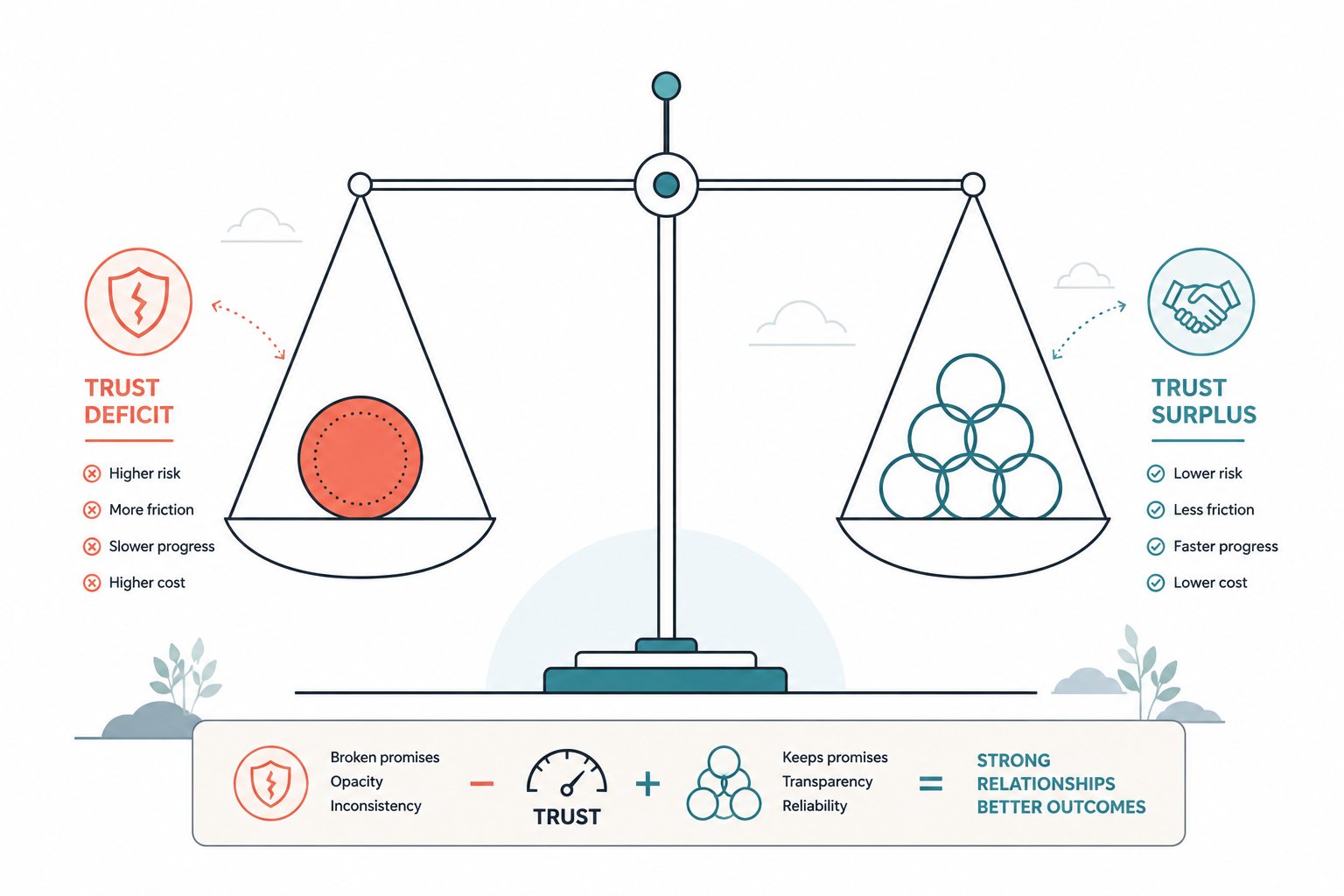
Think of each customer carrying a running trust balance. Positive interactions add to it; negative ones subtract. The balance shifts with every touchpoint.
When a customer’s trust balance climbs above a certain threshold, they become loyal — using the platform by default, tolerating minor friction, and less responsive to competitive alternatives. Keeping a healthy share of your customer base above this threshold is the actual goal of retention.
When the balance falls below a threshold in the other direction, churn risk rises sharply. Systems designed to prevent customers from reaching this point — proactive support, clear communication, reliable operations — are not costs to be minimized. They are trust investments.
Not all interactions are equal
The trust ledger is not linear. Some events move the balance significantly; others marginally.
Minor trust deficits: an app that briefly fails to load, a transaction that takes longer than expected to settle.
Major trust deficits: a failed withdrawal, any event that causes direct financial loss to the customer.
Minor trust surpluses: smooth onboarding, a high transaction success rate, consistent availability.
Major trust surpluses: a support interaction where the platform goes beyond its stated policy to make a customer whole.
The weighting matters. A single major trust deficit can erase months of accumulated minor surpluses. Platforms that optimize for transaction volume at the expense of reliability are running a trust deficit that doesn’t appear on any dashboard — until it appears in churn.
Why this framing holds
Technology interfaces change. The specific friction points that erode trust today differ from those of a decade ago. But the underlying dynamic — that customer behavior is shaped by accumulated experience, not by a single acquisition moment — has remained consistent across every wave of platform competition.
CAC is easy to measure. Trust cost requires building systems to observe it. That asymmetry is probably why most platforms default to the former.